
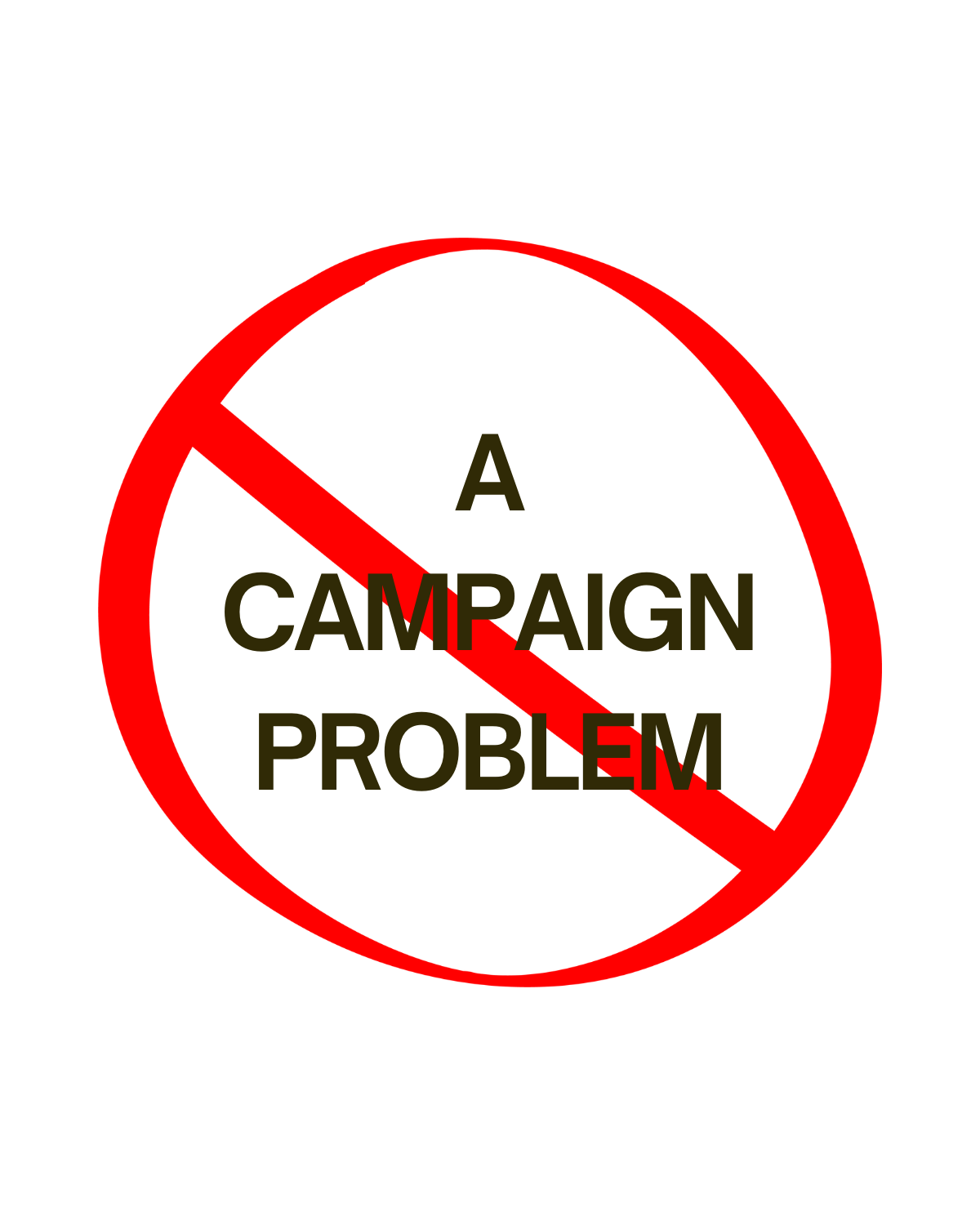
Growth often stalls not because organizations lack effort, but because the structure beneath that effort is misaligned.
What many leaders perceive as a campaign or messaging challenge is often something deeper.
Across organizations of different sizes and missions, I see the symptoms vary. But the pattern remains the same: brand, systems and revenue strategy are built in silos rather than integrated to drive impact.
This dynamic sits beneath many of the tensions that I write about: campaign-driven efforts versus compounding growth, transaction versus relationship, short-term activity versus long-term sustainability.
When brand, systems and revenue strategy don’t reinforce one another, organizations default to episodic campaigns and progress resets.
How Misalignment Shows Up
Structural misalignment rarely announces itself directly. It appears as leadership frustration, operational friction and hampered outcomes. For example:
Acquisition Without Onboarding
Significant investment goes into acquisition campaigns, while onboarding systems are lackluster.
If new constituent entry isn’t supported by proper lifecycle integration, automated messaging, and a frictionless experience through connected platforms, the possibility of losing that person quickly is high.
As AI accelerates workflows, disconnected systems become more expensive. Technology increases speed, but without the right platform selection and integration, it amplifies inefficiency rather than impact.
New supporters arrive, yet momentum does not build.
Messaging Without Revenue Strategy
Funding communications fail to convert. Not because the messaging is weak, but because the revenue strategy is undefined.
If the asks are too generic, lack clear value hierarchy, or fail to prioritize high-intent audiences, the proof is sadly in the pudding.
Brand communications cannot compensate for a fundamental revenue strategy that lacks clarity, real-life battle testing and research-backed insights.
Revenue Priorities Without Systems Backbone
Major initiatives are handled manually or poorly.
Big events without event infrastructure and software. Subscription models without solid backend credit card management. Fervent campaigns leading donors to a page with broken or insufficient ways to give.
These are often core revenue priorities, yet unsupported by the tools, architecture and tech stack required to sustain them.
Beneath the Symptoms
These are only illustrations.
The deeper issue is structural misalignment.
Siloed brand.
Siloed systems.
Siloed revenue strategy.
When these functions operate independently, organizations remain dependent on episodic efforts, rather than building compounding stability.
And over time, impact stalls.
Why Alignment Matters
When brand, systems and revenue strategy are aligned:
- Growth compounds over time
- Technology enables the strategy
- Messaging reflects revenue priorities
- Leadership decisions become steadier
- Impact expands alongside revenue
Alignment is not about adding more activity. It’s about integrating what already exists into a coherent foundation for growth.
A Structural Lens
In my work with leadership teams, this often means stepping back from the surface symptom and examining the architecture beneath it.
Where are technical platforms lacking?
Where is revenue strategy undefined?
Where is brand carrying too much weight?
Often, the solution is not to go deep into one function, but to recalibrate brand, systems and revenue strategy together, at the depth required in each to restore balance.
If your organization is working tirelessly but resetting momentum each year, the issue may not be effort.
It may be structural alignment.
Emily Moyer is the Principal of Impact Ilk Brands, a consultancy designing architecture for growth at mission-driven businesses and non-profits. If growth has to be recreated each cycle, something underneath isn’t working. Ready to address it? Schedule a chat with Emily on this page.
Leave a Reply